Money, power, and the stories we tell. The complete offline reading edition, generated from the same source as the interactive files.
This is a selected history, not an exhaustive biography or a live legal-status database. The Record contains sourced statements and identified reasoning; Our assessment is editorial opinion. Source notes explain the limits. See the editorial method for scope.
Origins / 1987 · Documented
The contrarian stance came before the fortune
The Stanford Review offers an early view of an enduring habit: build an institution to challenge an institution.
Stanford University’s Main Quad, May 2011. Campus context; not a photograph of Thiel’s student years. King of Hearts · CC BY-SA 3.0 · Commons Resized and re-encoded as JPEG; embedded metadata removed. Presentation may crop the image.
The record
The Stanford Review’s own history dates its founding to 1987 and describes Thiel as its first editor-in-chief. The paper presented itself as an alternative to what its founders regarded as a narrow campus consensus [1].
That self-description is not the only reading. A 2021 New Yorker review of Max Chafkin’s biography describes the paper’s early conservative positions and situates them within disputes about Stanford’s curriculum and campus politics [2].
The contrast is useful because it identifies an argument that recurs later: whether an institution is excluding legitimate alternatives, and whether a counter-institution broadens debate or advances another concentrated viewpoint. The company stories begin later; the political sensibility did not appear only after commercial success.
At the time
The paper presented itself as an alternative to campus consensus.
What the record shows
Its own history and later criticism offer different accounts of the same institution.
PayPal: the business that made the next bets possible
A payments company becomes a $1.5 billion acquisition—and a source of capital for very different ambitions.
PayPal headquarters in San Jose, California, photographed in July 2013. A later view of the company Thiel co-founded. Sagar Savla · CC BY-SA 3.0 · Commons Resized and re-encoded as JPEG; embedded metadata removed. Presentation may crop the image.
The record
Thiel co-founded PayPal and served as its chief executive. His firm’s biography describes that role [1]. The clearest early outcome is a transaction: on 3 October 2002, eBay announced that its acquisition of the company had closed, at approximately $1.5 billion in stock [2].
The completion announcement said PayPal would continue as an independent brand and that eBay’s Billpoint payment service would be phased out. It also announced Thiel’s resignation as chief executive, with Matt Bannick assuming his responsibilities [2]. The deal had a specific organizational outcome as well as a headline price.
The acquisition price was for the company. It was not $1.5 billion paid personally to Thiel. Nor does co-founding mean that one person created the product, operations, or customer base alone. The underlying event is substantial without inflating an individual’s share of the achievement [2].
At the time
PayPal was a business addressing online payments.
What the record shows
The completed acquisition gives a concrete outcome against which to evaluate that business.
Facebook: an early investor, and a seat at the table
An early investment and a long board tenure are significant roles, with limits.
Facebook’s Menlo Park campus, photographed from the air in May 2013. The campus shown postdates Thiel’s 2004 investment. Austin McKinley · CC BY 3.0 · Commons Resized and re-encoded as JPEG; embedded metadata removed. Presentation may crop the image.
The record
Thiel’s significance at Facebook was financial and institutional. Meta’s 2022 announcement identifies him as an early investor and says he had served on the board since 2005. It announced that he would not stand for reelection at the annual meeting that year [1].
Those are consequential roles: an early investor takes a risk before success is obvious, while a director participates in governance. They are also specific roles. The company announcement does not describe him as Facebook’s founder or as its chief executive [1].
The distinction matters when a historical connection becomes an explanation for a current platform decision. A past board seat is a reason to examine influence during that period; it is not evidence of authority over every subsequent moderation decision, product change, or political outcome.
At the time
Thiel became an early investor and later a director.
What the record shows
Meta’s own announcement establishes the role and the announced departure.
An early SpaceX investment is a substantive part of the favorable case. The financing history also includes NASA and the company’s own spending.
A SpaceX Falcon 9 launches the GRACE Follow-On mission from Vandenberg, California, on May 22, 2018. Illustrative of the company’s space infrastructure. Bill Ingalls · Public domain · Commons Resized and re-encoded as JPEG; embedded metadata removed. Presentation may crop the image.
The record
Founders Fund identifies Thiel as a partner and lists SpaceX and Airbnb among companies it has backed [1]. In August 2008, Via Satellite reported a $20 million equity investment by the firm in SpaceX [2]. The money is attributed to the firm, not treated as a personal check by every partner.
The significance is practical: capital lets an uncertain business hire, develop hardware, and keep trying. SpaceX later developed a cargo capability for the International Space Station. NASA’s program history records roughly $454 million of company financing and $396 million of NASA funding for the COTS development effort, completed with the 2012 demonstration [3].
That is a more informative innovation story than assigning the outcome to one investor. Private capital, the company’s own resources, public funding, and NASA’s technical work all appear in the record. The successful capability is real; the contributions are different [3].
The firm biography is selective and promotional. Its successful portfolio names should be read alongside setbacks such as Clarium, rather than treated as a complete evaluation of every investment associated with Thiel.
At the time
Venture funding offered capital for companies pursuing difficult markets.
What the record shows
The firm’s public biography documents its claimed involvement; it is not an independent assessment of social benefit.
The intelligence relationship is real. The conclusion that Thiel secretly controls an agency does not follow.
Server racks inside a data center. Illustrative infrastructure; this is not identified as a Palantir facility. Carl Lender · CC BY 2.0 · Commons Resized and re-encoded as JPEG; embedded metadata removed. Presentation may crop the image.
The record
Palantir’s early national-security relationships are a matter of public reporting. WIRED’s 2012 account describes its approach to intelligence customers and meetings with In-Q-Tel, the investment organization established to connect private technology with intelligence needs [1].
In-Q-Tel’s own history describes its 1999 origins and later partnerships with agencies including the FBI, NSA, and Defense Intelligence Agency [2]. A company’s relationship with that ecosystem is a meaningful fact about its market and development, not an exotic explanation that has to be inferred from coincidence.
The company’s SEC filing identifies Alexander Karp as a founder and chief executive [3]. Corporate leadership, customers, investment, and a founder’s personal intelligence status are separate questions. The sources here establish the company’s connections; they do not establish that Thiel commands an agency or is a CIA employee.
Documented checkpoints & limits
1999
The institutional starting point
In-Q-Tel’s own account explains the organization’s CIA origins and purpose. Source ↗
2012
Public reporting on Palantir
WIRED describes the company’s meetings and intelligence relationships. Source ↗
2023
A different agency, a different claim
Reporting about an alleged FBI-source relationship should be evaluated on its own sourcing, not merged into a claim of CIA control. Source ↗
At the time
Palantir pursued national-security customers.
What the record shows
The connection is documented, while stronger claims require separate evidence.
Seasteading: a public experiment in leaving conventional politics
An unusual institutional ambition is documented. The idea is not evidence that an independent ocean state has been built.
The record
The Seasteading Institute’s history describes Thiel’s early financial support and dates the organization’s formation to 15 April 2008. The ambition was to explore communities at sea as a setting for different forms of governance [1].
The institute’s supporters page, dated June 2020, says the Thiel Foundation last donated in 2014 [2]. Describing him as an early supporter is therefore more precise than assuming continuous foundation funding to the present.
An organization, a proposed governance model, an engineering study, and a functioning sovereign community are different achievements. The institutional sources establish advocacy and support; they are not proof of a completed independent state.
At the time
Financial support helped establish an organization researching governance at sea.
What the record shows
The institute dates the foundation’s last donation to 2014. Support is not proof of a completed sovereign community.
Democracy and freedom: the sentence, and the rest of the essay
The controversial sentence is authentic; its implications are a matter for argument.
The west front of the United States Capitol. An institutional view used to illustrate political influence. Architect of the Capitol; derivative edit by O.J. · Public domain · Commons Resized and re-encoded as JPEG; embedded metadata removed. Presentation may crop the image.
The record
In his 13 April 2009 Cato Unbound essay, Thiel wrote: “I no longer believe that freedom and democracy are compatible.” He discussed online communities, commercial space activity, and seasteading as alternatives to conventional politics [1].
A passage links women’s suffrage and expanded welfare constituencies with the difficulty of libertarian capitalism. In his 1 May response, Thiel rejects disenfranchising any class of people, including taking away women’s votes [1][2].
The qualification does not withdraw his broader disillusionment with voting. Readers can therefore reasonably criticize the essay’s view of democratic politics while recognizing that “he explicitly proposed abolishing women’s voting rights” is a stronger, inaccurate account of the text.
Documented checkpoints & limits
13 April 2009
The original argument
The essay questions democratic politics and discusses technology as a route beyond it. Source ↗
1 May 2009
The suffrage response
Thiel rejects disenfranchisement in a separate follow-up, also copied below the essay. Source ↗
The distinction
Context narrows one accusation
The response corrects the voting-rights allegation without withdrawing the essay’s broad skepticism about democracy. Source ↗
At the time
The essay presented an argument about libertarian strategy.
What the record shows
The original text remains available, including its clarification; neither should be omitted.
Thiel’s dated follow-up, rejecting disenfranchisement while maintaining his skepticism about voting. A distinct published response, also copied beneath the earlier essay.
The Thiel Fellowship: who gets the freedom to take a risk?
A selective grant offers time, money, and connections outside college. Its success stories need a fair comparison.
Stanford University’s Main Quad, May 2011. Campus context; not a photograph of Thiel’s student years. King of Hearts · CC BY-SA 3.0 · Commons Resized and re-encoded as JPEG; embedded metadata removed. Presentation may crop the image.
The record
The fellowship’s own site dates its founding to 2011. It describes a two-year program for young people who skip or stop out of college to build things, with financial support and access to the foundation’s network. The current advertised grant is $250,000 [1].
That is a practical offer rather than merely an argument against college: it changes how long a selected participant can work before needing income, and offers introductions that many young founders would otherwise struggle to obtain. These are the program’s stated benefits, not a finding that every fellow benefits equally [1].
WIRED’s 2016 feature describes recruitment evolving to include people already developing substantial projects. Such examples help explain why the fellowship’s outcomes cannot be read as success created from a standing start [2].
A selective program cannot be evaluated by its best-known alumni alone. The relevant comparison would include unsuccessful fellows, comparable applicants who were not selected, and the value of alternatives they gave up. The official description supplies no controlled answer to that question.
At the time
The program challenged the assumption that college must immediately precede ambitious work.
What the record shows
The program continues to describe that alternative, with a current grant amount that older accounts can miss.
New Zealand citizenship: an exception worth examining
An unusual citizenship decision is an accountability question that can be examined through official records.
Mountains around the northern part of Lake Wānaka, New Zealand, April 2019. A regional landscape, not a photograph of Thiel’s property or evidence of a bunker. Michal Klajban · CC BY-SA 4.0 · Commons Resized and re-encoded as JPEG; embedded metadata removed. Presentation may crop the image.
The record
A June 2011 departmental submission records 12 days in New Zealand as a permanent resident during the preceding five years, compared with the ordinary 1,350-day presence requirement. It says Thiel intended to continue residing in the United States to manage his companies [1].
Officials recommended exceptional approval, citing entrepreneurship, investments, business connections, and philanthropy. The minister approved the grant under section 9(1)(c); the department’s account dates approval to 30 June 2011 and an overseas ceremony to August [1][3].
The presence details were released in June 2017 after an Ombudsman recommendation. The Auditor-General subsequently declined an inquiry, explaining the broad statutory discretion and the limits of its remit [1][2].
This is concrete evidence of an unusually favorable exception. The number should not become “12 days in his whole life”: the official statement concerns permanent-resident presence in the assessment period. The file also does not establish a bribe or a completed escape bunker.
At the time
Citizenship was granted under an exceptional decision-making process.
What the record shows
The Auditor-General’s published consideration explains the review and its limits.
Phrase carefully: 12 days as a permanent resident in the five-year assessment period, not necessarily 12 days in his entire life. Philanthropy and investments appear as reasons advanced for approval, not proof of a corrupt exchange.
Clarium: the losing chapter in the investment story
An early success does not make an investor infallible. Fund assets and investment returns also measure different things.
The record
A February 2011 Institutional Investor profile described Clarium’s three-year run of losses and a 23% decline in 2010. It reported that assets, formerly around $7 billion, had fallen to roughly $500 million [1].
The same account credited strong earlier results, including a profitable mortgage-market position in 2007. The point is a changing record, not a uniform history of either brilliance or failure [1].
An asset total combines investment performance with money entering or leaving a fund. It cannot be used as if it were the return earned by an investor who stayed throughout. This guide does not turn the fall in assets into a matching percentage loss on every client’s holdings.
At the time
Earlier successful bets helped establish a reputation for foresight.
What the record shows
The later losing period belongs in the investment record; assets and returns must be distinguished.
His business argument makes a useful distinction between creating value and retaining it. The public-interest question comes next.
The record
In a 2014 Wall Street Journal essay, Thiel argued that a business must capture value as well as create it. He contrasted low airline margins with Google’s profitability and recommended building a monopoly rather than competing in an undifferentiated market [1].
As business advice, the attraction is differentiation: make something useful that competitors cannot easily reproduce, so the company can retain resources. That is an account of a firm’s incentives. It is not in itself a measure of consumer benefit or democratic accountability.
The question for a reader is what sustains the advantage. A product people value, a technical breakthrough, switching costs, exclusionary practices, and favorable regulation would have different implications. The public argument does not settle that empirical question for each company.
At the time
The essay offered founders a strategy for retaining business value.
What the record shows
The argument is public; whether an advantage serves the public remains a separate evaluation.
The WikiLeaks proposal: a documented episode, not a hypothetical risk
Published emails exposed a plan targeting WikiLeaks and supporters. Palantir’s response—and the limits of what happened—matter.
The record
In February 2011, reporting on leaked HBGary correspondence described a proposal involving HBGary, Berico, and Palantir against WikiLeaks and supporters, including journalist Glenn Greenwald. Forbes reproduced Alex Karp’s statement severing ties with HBGary and apologizing for any Palantir involvement [1].
Salon published December 2010 email exchanges about adding material on Greenwald to the presentation, alongside Palantir’s denials about the offensive recommendations and its statement that an engineer had been placed on leave pending review [2]. Salon employed Greenwald, a relevant relationship when considering its coverage.
The sources document preparation, disclosure, and a corporate response. This guide has not independently authenticated the original hacked archive. These reports do not establish that the proposed campaign was executed or that Thiel personally authorized it.
At the time
The published plan raised concerns about targeting journalists and political advocacy.
What the record shows
The proposal, apology, and leave decision are documented; execution and personal authorization are separate claims.
Published email excerpts and company response; Salon employed one of the proposed targets. The original hacked archive was not independently authenticated here.
The lead file / Media & power · Contested interpretation
Gawker: the privacy case that became a test of private power
Hulk Hogan had a privacy claim. Peter Thiel had the money to finance it. The outcome reached far beyond one article.
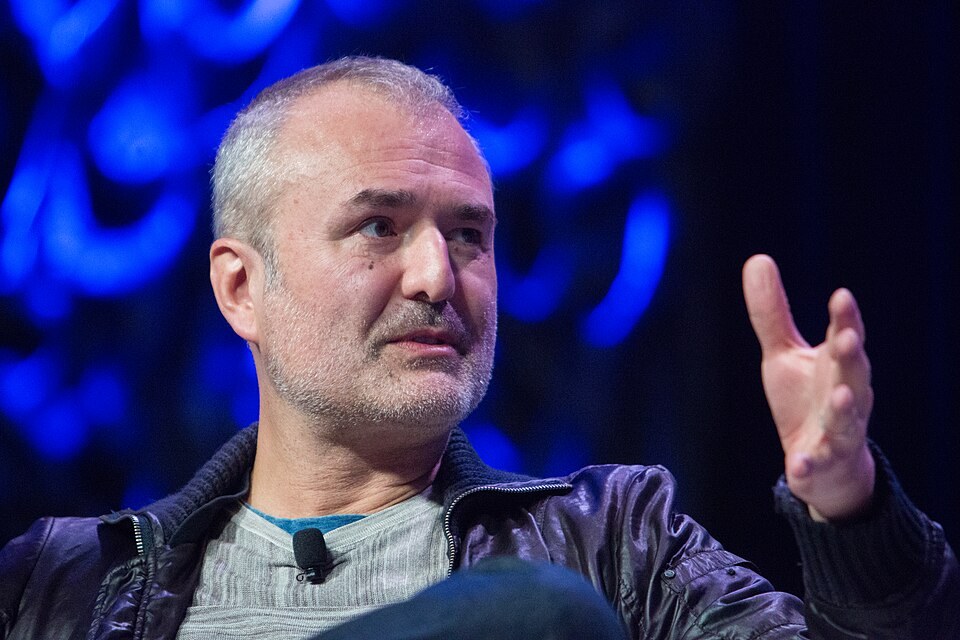
Gawker founder Nick Denton during the “Life after Gawker” session at SXSW, Austin, March 12, 2017. Ståle Grut / NRKbeta · CC BY-SA 2.0 · Commons Resized and re-encoded as JPEG; embedded metadata removed. Presentation may crop the image.
The record
The case centered on Gawker’s publication of intimate footage of Terry Bollea, the wrestler known as Hulk Hogan. It was Bollea’s privacy case. In an October 2016 National Press Club Q&A, Thiel discussed financing the case and defended his decision on privacy grounds [1].
The bankruptcy court’s 2017 account records $115 million in compensatory damages and $15 million in punitive damages against Gawker itself [2]. Contemporary reporting also cited an overall $140 million award [3]. The later settlement gave Bollea $31 million in cash plus contingent rights; it was not a payment of the trial award to Thiel [2][3].
The press-freedom concern was articulated while the funding story was emerging. On 25 May 2016, the Committee to Protect Journalists warned about the use of a wealthy individual’s resources against a news organization [4]. The privacy rationale and the chilling-effect concern address different parts of the same event.
The outcome was not a judicial finding that all journalism about powerful people was unlawful. It showed that a publisher could lose a specific privacy case with existential financial consequences, while outside funding helped a plaintiff sustain the litigation [2].
Documented checkpoints & limits
2016
The plaintiff is Terry Bollea
Hulk Hogan brought the privacy case. Thiel’s own privacy dispute is part of the background, not the identity of this lawsuit. Source ↗
25 May 2016
Funding reports become public
CPJ responds to reports of outside funding and raises a press-freedom concern. Source ↗
November 2016
The settlement differs from the verdict
The reported cash settlement is $31 million; the court also describes contingent rights. Source 1 ↗ · Source 2 ↗
At the time
The case was brought by Hogan over publication of intimate footage.
What the record shows
Thiel’s funding became public; the bankruptcy showed the stakes for the publisher.
A primary transcript of Thiel explaining his funding and privacy rationale. The moderator’s introductory shorthand should not replace the court record about the plaintiff.
Thiel’s support was an explicit political endorsement, not a hidden association.
The convention floor during Peter Thiel’s address on the fourth day of the Republican National Convention in Cleveland, July 21, 2016. Voice of America video still. Voice of America · Public domain · Commons Resized and re-encoded as JPEG; embedded metadata removed. Presentation may crop the image.
The record
Thiel addressed the 2016 Republican National Convention in support of Donald Trump. PBS preserves the complete speech [1]. At an October National Press Club appearance he explained the endorsement, placing it in an argument about economic stagnation and dissatisfaction with political leadership [2].
These recordings are primary evidence of his public advocacy. They allow a reader to distinguish what he said from an interpretation of his motives. The convention endorsement was public; describing that event as a concealed connection would misstate its character [1][2].
The endorsement also belongs to a specific election. The guide’s file on JD Vance examines a later political investment; it does not assume every subsequent action of a party or administration can be attributed to Thiel.
At the time
Thiel spoke as a supporter during the election.
What the record shows
The recordings allow readers to inspect the endorsement directly.
The young-blood story: research, rumor, and a very sticky metaphor
The documented interest, the satirical image, and the medical claim are three different things.
The record
The identifiable starting point here is an April 2015 interview published by Inc. on 1 August 2016. Thiel discussed interest in parabiosis and young-blood research. The article also said he had not begun the treatment and quoted a spokesman saying that had not changed [1].
The same day, The New Republic published an explicitly comic vampire-themed article. Its jokes illustrate how a research interest could be recast as a memorable image. The satire is evidence that the metaphor was circulating, not evidence of a medical procedure [2].
The 2017 Ambrosia-contact reporting was disputed [5][6]. Inquiry, treatment, and efficacy require different evidence.
Thiel publicly denied receiving young-blood injections in 2018 [3]. The FDA’s guidance separately says young-donor plasma has no demonstrated anti-aging clinical benefit and warns of transfusion risks [4]. That medical warning neither verifies nor disproves a particular person’s treatment history.
Documented checkpoints & limits
2015 → 2016
An interview is published
Inc. publishes an April 2015 interview on 1 August 2016, with a spokesman saying he had not started. Source ↗
1 August 2016
A satirical article appears
The New Republic publishes a vampire-themed joke the same day. The timing is documented; a complete transmission history is not. Source ↗
June 2017
A contact dispute
Ambrosia’s founder denied contact; the earlier reporting was defended. Source 1 ↗ · Source 2 ↗
Food aid: a concrete use for a controversial technology
WFP describes savings and better logistics. Privacy advocates ask what happens to the people represented by the data.
Women unload humanitarian aid from a World Food Programme helicopter in Bebedo, Mozambique, April 8, 2019, after Cyclone Idai. Context for aid logistics; this image does not document Palantir software in use. U.S. Air Force / Tech. Sgt. Thomas Grimes · Public domain · Commons Resized and re-encoded as JPEG; embedded metadata removed. Presentation may crop the image.
The record
In February 2019, the World Food Programme announced a five-year Palantir partnership to integrate information used in aid delivery. It said a pilot connected to its Optimus supply-chain tool had saved more than $30 million in operations where it was being used and tested [1].
In 2021, WFP described the software’s contribution to pandemic-era logistics and reported movement of humanitarian cargo across 173 countries. This is the customer’s account of a larger operation involving staff and multiple partners, not an independently isolated estimate of Palantir’s effect [2].
Privacy International’s February 2019 analysis questioned the partnership’s transparency and the risks attached to humanitarian data, particularly for vulnerable recipients [3]. Those concerns cannot be answered solely by pointing to a cheaper supply chain; neither do they make the operational use imaginary.
The pilot savings should be dated and scoped. They were a WFP-reported result for a tool and a set of operations, not a personal donation by Thiel or a claim that he alone fed a given number of people [1].
At the time
The partnership promised operational improvements.
What the record shows
WFP later described uses during the pandemic; independently isolating the software’s contribution would require more evidence.
Data & rights / 2020 assessment · Contested interpretation
Immigration enforcement: what a software supplier enables
A rights organization’s criticism and the company’s response should be considered together.
An anti-ICE protest in Hartford, Connecticut, February 26, 2026. The photograph documents a protest, not any specific Palantir system or enforcement action. Comecoquito · CC0 · Commons Resized and re-encoded as JPEG; embedded metadata removed. Presentation may crop the image.
The record
Amnesty International’s 2020 briefing criticized Palantir’s human-rights due diligence for its ICE contracts. It assessed a high risk that the technology was contributing to rights violations affecting migrants and asylum-seekers. That is Amnesty’s assessment, attributed here rather than presented as a criminal judgment [1].
Palantir’s response emphasized that it builds software for customers’ use rather than acting as a data broker. It also acknowledged that choosing customers and supporting use of its products entails moral responsibilities [2]. This is an important part of the company’s own response, alongside its narrower description of its role.
The distinction between supplier and agency identifies where different decisions occur. It does not, by itself, tell us whether a particular use is proportionate, whether people can challenge bad information, or what a supplier should do when it identifies a harmful deployment.
The evidence cited is about institutional conduct and a rights organization’s evaluation. It does not establish that Thiel personally selected a deportation target or took an operational enforcement decision.
At the time
The company emphasized lawful software provision; Amnesty questioned the consequences.
What the record shows
The disagreement is documented. This guide does not turn an advocacy assessment into an adjudicated personal offense.
The Vance connection: money is real; total control is a claim
The often-cited $15 million supported an outside group. That distinction explains how the influence actually operated.
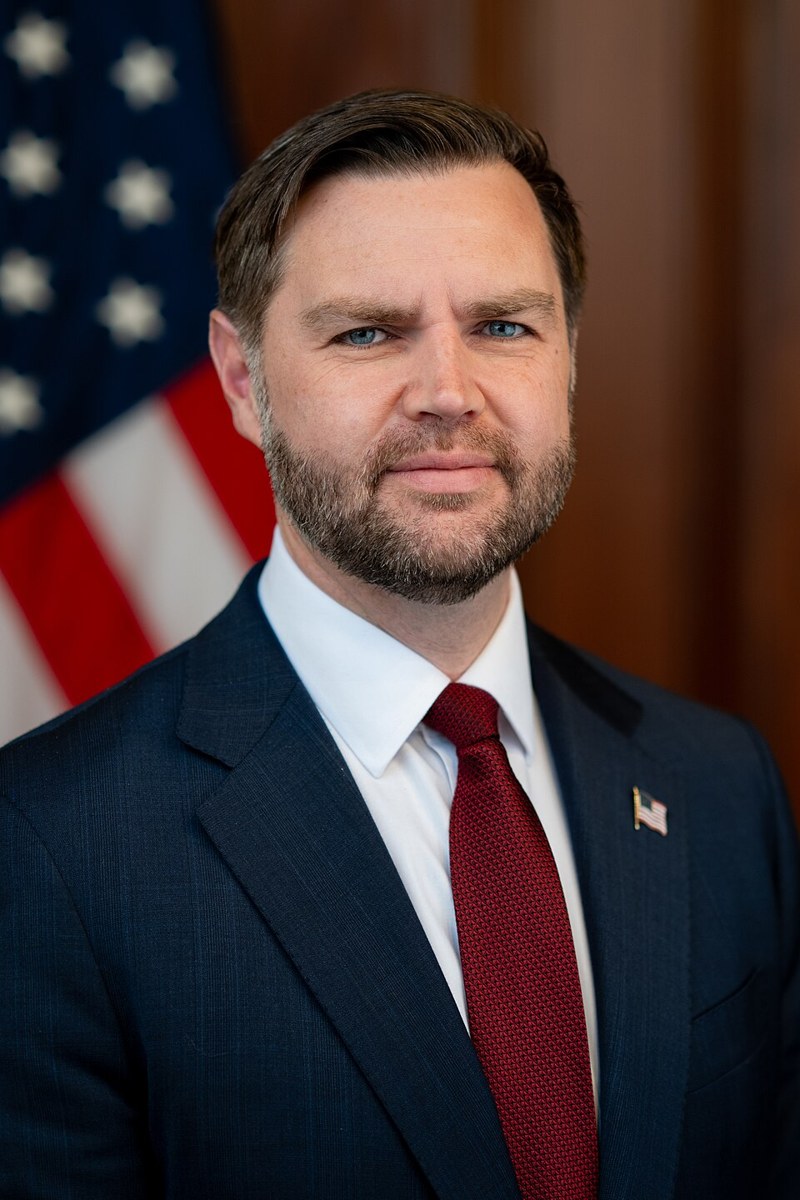
Official White House portrait of Vice President JD Vance, March 25, 2026, in his ceremonial office. Emily J. Higgins · Public domain · Commons Resized and re-encoded as JPEG; embedded metadata removed. Presentation may crop the image.
The record
TIME’s 2024 profile reports that Thiel gave $15 million to a super PAC supporting Vance’s 2022 Senate bid [1]. This was support through an outside organization, not a $15 million check to the candidate’s own campaign committee.
The FEC’s 2022-cycle page for Protect Ohio Values PAC identifies the committee and its independent expenditures. It explains that those funds are not given directly to, or spent by, the candidate. The committee’s aggregate totals should not be mistaken for Thiel’s personal contributions [2].
Contemporaneous Roll Call reporting described a $10 million contribution in March 2021 and a further $3.5 million after Trump’s April 2022 endorsement. That was a pre-primary snapshot; it should not be substituted for the later reported total [3].
The sequence supports scrutiny of how an unusually large donor can help a candidate remain competitive. It does not establish that funding alone explains the election result or that the politician later takes instructions on every policy.
At the time
The network developed alongside Vance’s political rise.
What the record shows
Public reporting offers specific relationships to examine, with sourcing limits.
A 2024 reported profile that identifies Thiel’s $15 million super-PAC support. Its account of political causation is reporting, not proof that one factor determined the election.
Federal disclosure summary for the 2022 cycle. Committee totals are not the donor’s personal total; independent expenditures are not direct campaign contributions.
Palantir’s prospectus documents concentrated founder voting power. It is a firmer starting point than a vague claim that one man controls everything.
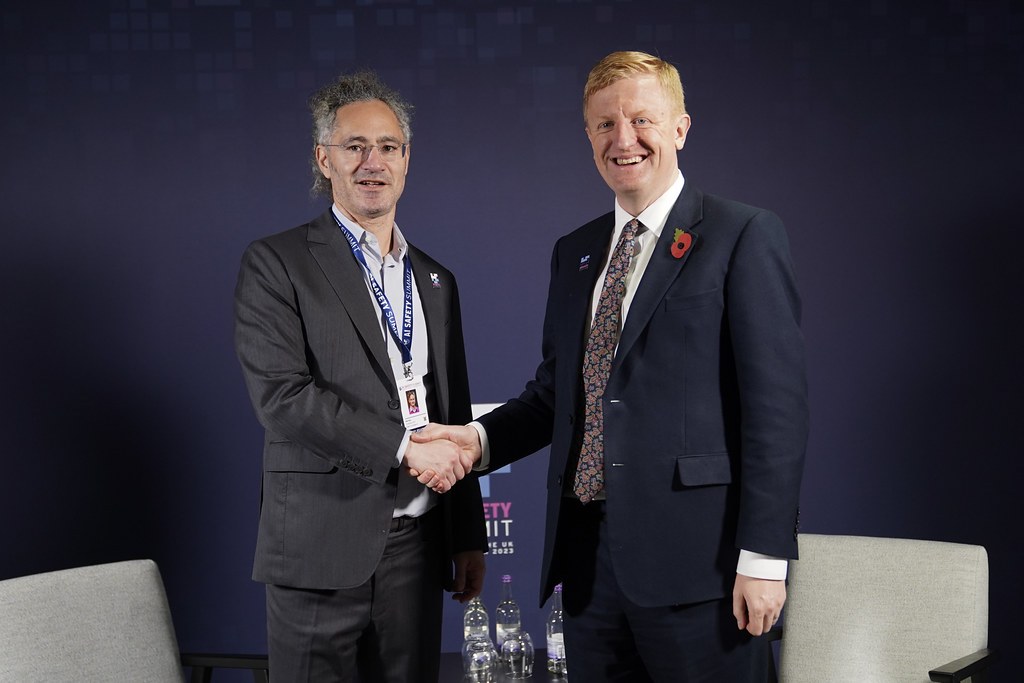
Alex Karp meets UK Deputy Prime Minister Oliver Dowden at the AI Safety Summit, Bletchley Park, November 1, 2023. Ben Dance / No. 10 Downing Street · CC BY 2.0 · Commons Resized and re-encoded as JPEG; embedded metadata removed. Presentation may crop the image.
The record
Palantir’s September 2020 prospectus described three share classes: Class A with one vote per share, Class B with ten, and Class F with variable voting rights. It named Alexander Karp, Stephen Cohen, and Peter Thiel in the founder arrangement [1].
Subject to specified ownership and other conditions, the structure was designed to give the founders collectively up to 49.999999% of voting power; the filing explains circumstances in which their aggregate power could be higher. The prospectus warned investors that voting control would remain concentrated [1].
These are terms disclosed for the 2020 direct listing, not a real-time ownership table. They establish a mechanism for founder influence, not an instruction from Thiel to a particular government agency. The roles of corporate shareholders, executives, and customer institutions still need to be traced separately.
At the time
The 2020 listing disclosed a structure designed to preserve founder voting influence.
What the record shows
The prospectus documents a collective mechanism, not a present-day ownership table or personal operational instruction.
Palantir’s 2020 direct-listing prospectus. Establishes the disclosed voting structure and its conditions, not current ownership percentages or SEC endorsement.
The Roth IRA story: a tax shelter becomes a policy argument
A reported retirement-account balance raised a fairness question. It was not itself a calculation of unpaid tax.
The record
ProPublica reported a $5 billion Roth balance for Thiel in 2019 [1].
The public record of a July 2021 Senate Finance hearing contains competing submissions about very large retirement accounts. A statement by Daniel Hemel and Steven Rosenthal discusses mega-IRAs and proposed limits; other submitted material argues that people relied on Roth rules when arranging their savings [2]. These are the authors’ positions, not findings adopted by a court.
An account balance, investment gain, tax due, and criminal offense are distinct quantities or propositions. This guide has not independently examined the confidential records described by the investigation, and the hearing record is not an adjudication of Thiel’s transactions.
At the time
A 2021 investigation reported an exceptional retirement-account balance.
What the record shows
The amount was for 2019. Reporting and policy testimony do not themselves adjudicate illegality.
The NHS: a public-service contract meets a trust problem
A public-health platform creates both an operational opportunity and an accountability obligation.
Palantir’s stand at the NHS Confederation conference, June 15, 2022. Rathfelder · CC BY-SA 4.0 · Commons Resized and re-encoded as JPEG; embedded metadata removed. Presentation may crop the image.
The record
NHS England announced in November 2023 that a Palantir-led consortium had won its Federated Data Platform contract. The stated purpose was to connect information already dispersed across systems and improve operational coordination [1].
Its FAQs describe platform-specific arrangements and limits. They are a customer’s explanation of how the service is intended to operate, useful for checking broad claims that the contract simply gives a vendor ownership of everyone’s medical record [2].
Amnesty UK has called for the NHS contract to end, citing wider human-rights concerns about Palantir [3]. That is an argument about supplier choice and public institutions’ responsibilities. It is different from measuring whether a specific hospital workflow improved.
A public procurement award establishes that a supplier was selected; it does not independently validate every promised efficiency. Equally, opposition to the supplier does not by itself establish that an alleged data transfer took place.
At the time
The award was presented as a way to improve NHS coordination.
What the record shows
The public rationale and organized opposition can both be inspected.
“He owns everyone’s data”: what that claim leaves out
Software access, data processing, data ownership, and political control are different claims.
The record
Palantir describes its role as providing software that customers use to integrate and analyze their own information. NHS England’s account describes a particular deployment with defined scope. Neither is evidence that Thiel personally owns everyone’s records [1][2].
The distinction is not an assurance that every use is harmless. Palantir’s own documentation cautions that technical controls do not decide whether a use is lawful, necessary, or proportionate [3]. A system can preserve a customer’s ownership while making sensitive information much easier to find and combine.
The testable questions are therefore specific: which institution supplies the data, what legal authority permits the processing, who can access it, what decisions it supports, and how errors or misuse can be challenged. Those questions remain after the ownership claim is corrected.
Documented checkpoints & limits
The actual product
Integration and analysis
The company describes software for customers’ own data. That is the vendor’s statement, not an independent privacy audit. Source ↗
A specific deployment
The NHS arrangements
A real contract has defined institutional scope; examine that scope rather than assuming a universal transfer of ownership. Source ↗
The remaining concern
Safeguards are not a moral verdict
The company’s documentation itself says controls do not establish whether a use is necessary or proportionate. Source ↗
At the time
The real capacity to combine data makes broad claims intuitively plausible.
What the record shows
The cited materials describe customer-specific processing and controls, not universal ownership.
Epstein and Valar: follow the financial relationship precisely
Reported financial ties warrant scrutiny; association alone does not establish participation in crimes.
The New York Stock Exchange, August 2017. Financial-sector context; no specific transaction is depicted. Arild Vågen · CC BY-SA 4.0 · Commons Resized and re-encoded as JPEG; embedded metadata removed. Presentation may crop the image.
The record
A 16 June 2025 letter from Senator Ron Wyden cites reporting of a $40 million Epstein investment connected with Thiel. Its footnote points specifically to a New York Times report about funds managed by Valar Ventures. The letter is an investigative request and a source for what the senator alleged, not an independent court finding [1].
Later reporting summarized communications and an island invitation; it also recorded Thiel’s denial of wrongdoing and of visiting the island [2]. An investment in a fund, an invitation, an actual visit, and participation in a crime require different evidence.
The proposed Treasury-records legislation names Thiel and Valar among numerous people and entities [3]. Being named in a request is relevant to the scope of an inquiry. It is not a criminal charge, and the draft’s existence should not be reported as proof that all its requested records were produced.
This guide did not independently authenticate the underlying correspondence or inspect confidential fund records. The financial reporting justifies questions about due diligence and access; the sources here do not adjudicate Thiel’s participation in Epstein’s crimes.
Documented checkpoints & limits
4 June 2025
The financial report
The Times article cited in Wyden’s letter described the investment relationship. This guide relies on the letter and attributed reporting. Source ↗
16 June 2025
An investigative request
Wyden asks agencies for records. A request is evidence of scrutiny, not a completed prosecution. Source ↗
Later reporting
The response belongs in the record
The Week summarizes communications reporting and records Thiel’s denial. Underlying messages were not independently authenticated here. Source ↗
At the time
Reports of communications and financial ties prompted scrutiny.
What the record shows
The cited sources establish reporting and a legislative request; they do not adjudicate criminal participation.
The Antichrist lectures: a worldview enters the political story
Public reporting documents religious and political speculation, not a verified supernatural threat.
The record
AP reported on Thiel’s 2026 Rome lecture series about the Antichrist, describing it as following a similar series in San Francisco the previous September. The report also described Catholic institutions distancing themselves from the events [1].
That establishes a sequence of lectures and public reactions. The content belongs to religious and political interpretation: it is evidence of a worldview, not independent verification of a supernatural actor or an inevitable future.
A reader can examine how such a worldview may shape arguments about technology and government without adopting it or mocking it. To connect a particular policy or business decision to the lectures would require further evidence about that decision.
At the time
Thiel developed religious interpretations of political and technological risks.
What the record shows
The lectures are reportable events; their supernatural claims cannot be verified through ordinary documentary fact-checking.
The FBI-source report: more specific than an internet rumor
There is published reporting behind the claim. It should be described at the level its sourcing supports.
The record
In October 2023, Insider reported that Thiel had become a confidential human source for FBI agent Johnathan Buma in 2021. The Verge’s contemporaneous account, later included in House hearing materials, summarizes reporting based on multiple people and says the relationship concerned foreign contacts and the technology industry [1].
The Verge identifies Charles Johnson as a source who said he introduced Thiel to Buma. It also notes Johnson’s history of inaccuracies and describes his disappointment over expected investments. Neither Thiel nor the FBI commented to Insider for the report [1].
A PDF hosted with congressional hearing material is still a copy of journalism. Its location does not transform the report into an official FBI finding. The alleged source relationship is also different from being an employee, running the agency, or controlling its investigations.
At the time
The October 2023 stories reported an alleged source relationship beginning in 2021.
What the record shows
It remains attributed reporting in this guide; inclusion in a congressional packet is not agency confirmation.
A copy of an article included in House hearing materials. The underlying report remains attributed reporting; congressional hosting is not official verification.